On Friday morning the Tracker shows all competitive teams are concentrated between Ophir and Ruby. You might remember from Race Director Mark Nordman’s musher briefing prior to the race, there was deep snow pack on that section of trail. Because it’s not a well-used snowmachine route, setting a trail would be an extra challenge for the trail crew. Jessie Holmes commented while camped in Cripple that the trail from Ophir was slow on the surface but wasn’t punchy. Excellent news to have a firm base! Given the condition of the first 73 miles to Cripple, mushers can be optimistic for the next 70 miles into Ruby.
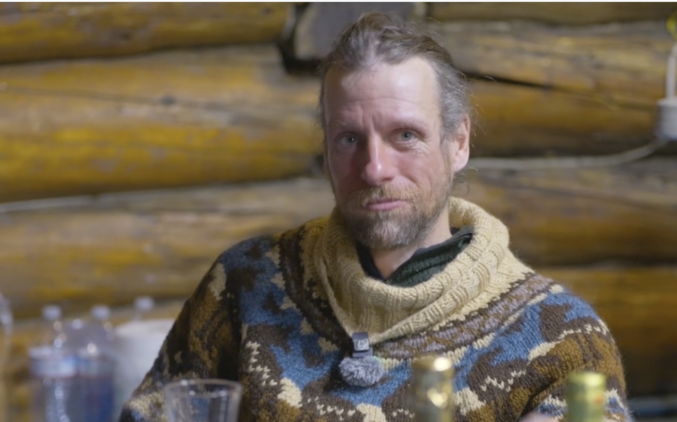
As first musher to the Yukon, Holmes enjoyed a gourmet dinner prepared by chefs from Locally Grown Restaurants in Anchorage. The menu included smoked salmon crostini, white bean and bacon soup, watercress salad, beef bourguignon and a chocolate pot de crème dessert. Jessie invited Ruby resident and long-time Iditarod volunteer Billy Honea to dine with him. Upon arrival in Ruby, Holmes declared his 8 hour Yukon rest. He arrived with 15 dogs albeit one of his biggest dogs was a passenger in the sled. Insider captured the pride and confidence he has in his dog team when he said, “This is one heck of a dog team. We just hauled a 70 pound dog here. They’re just vibrant!”
While eating the gourmet meal, Holmes said it wasn’t in his plan to stay in Ruby. But after enjoying the first course with the salmon dip, he said from here on out getting to the Yukon first was going to be part of his strategy. It was obvious that Jessie enjoyed the food and the company of his guest.
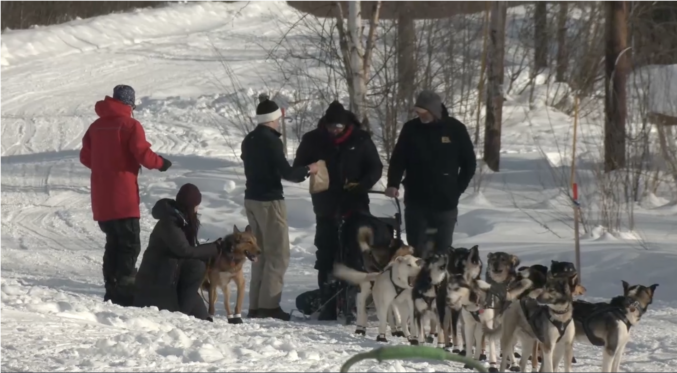
Going back to Thursday afternoon, Rookie Joey Sabin checked into Takotna and was anxious to be on his way. But wait, Takotna is known for friendliness and PIE. Staying for only 8 minutes didn’t preclude Joey from experiencing that special brand of Takotna hospitality or the great food. He received a to-go sack lunch and a piece of apple pie with a fork on a sturdy paper plate. While standing on the runners with snow hooks jammed into the trail in front of the checkpoint, Sabin consumed the pie in only a few bites then was off down the trail to enjoy his sack lunch later.
Sabin completed his 24 hour rest 18 miles back at McGrath. It was earlier than he had planned but he decided to rest early to give a couple of sore wrists some early care. He also wanted to get his dogs to eat a little better. He said they’re eating enough but could do better. He feed four wet meals during the long layover.
Iditarod has lots of legendary icons who have never run a dog team and Jan Newton of Takotna is one of them. About the time the Iditarod started in 1973, Jan and Dick Newton moved to Takotna. The tiny village wasn’t designated as a checkpoint but a neighbor of the Newton’s suggested they make a few meals for the mushers who passed through. From the simple beginning of moose stew and chili, Takotna’s famous brand of hospitality was born.
Annually, Jan and the other women in the village begin producing double-crusted fruit pies many weeks before the race. The crème pies go into production as the race approaches and continue until the last musher departs. In the fat years of the race, 75-80 pies would be consumed. First impression from that number is that every musher consumed a whole pie but remember there were volunteers and pilots to feed too. With smaller numbers in the race these days, the number of pies has dropped to between 30 and 40. Jan Newton passed away in 2012 and left the checkpoint in capable hands. Is it any wonder mushers want to do their 24 in the smallest checkpoint with the biggest welcome?
Joey Sabin was born in Michigan. He found his way to Alaska then while working for Iditarod veteran Sven Haltmann he began mushing in 2017. Joey left Alaska in 2020 for Minnesota where he established a kennel in Voyageur National Park. Racing called him back to Alaska where he met his partner Willoe Maynard and together they established Voyageur Outdoor Adventures in Two Rivers. Willoe trains the puppies and Joey focuses on the “A” team. In grade school, Joey’s teachers used Iditarod as a theme for projects. His favorite movie was and still is Iron Will. Sled dogs and running the Iditarod have been on his mind for a very long time. Right now he’s running between Ophir and Cripple.
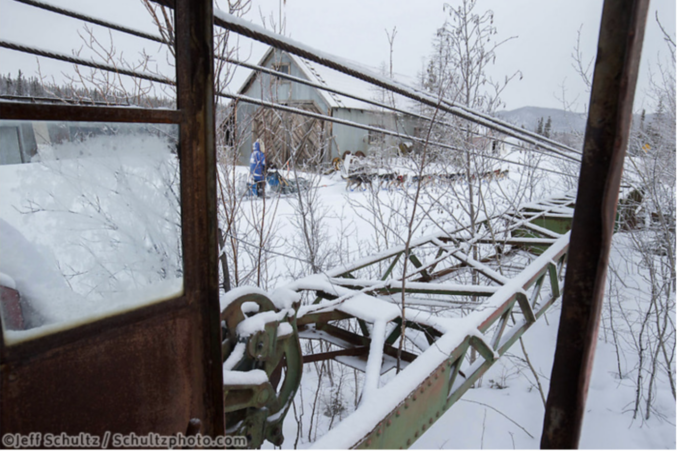
Both of those checkpoints have ties to the golden days of the Iditarod mining district. Gold miners named Ophir, Alaska after the Ophir mentioned in the Old Testament of the Bible. Supposedly, rich King Solomon received shipments of gold, silver and other valuable items from the wealthy land of biblical Ophir. The actual Ophir checkpoint is located near a cabin owned by the Forsgren family.

Cripple isn’t a village but a place located on the Innoko River in the former Iditarod Mining District. The checkpoint takes its name from an old steamboat landing located nearly by on the river. During the gold rush between 1908 and 1925, $35 million in gold , including some of the largest nuggets ever mined were taken from the area. The check point is a collection of platform tents erected when the race comes through in the even years.
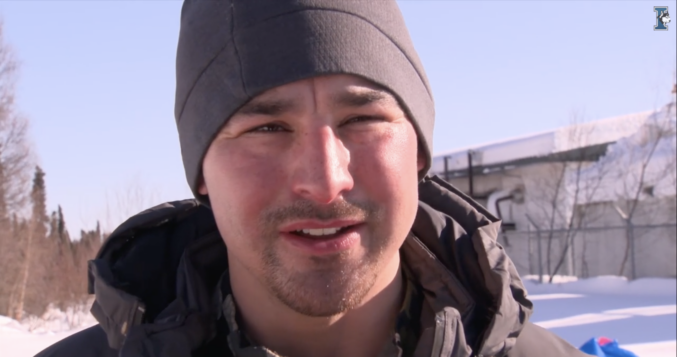
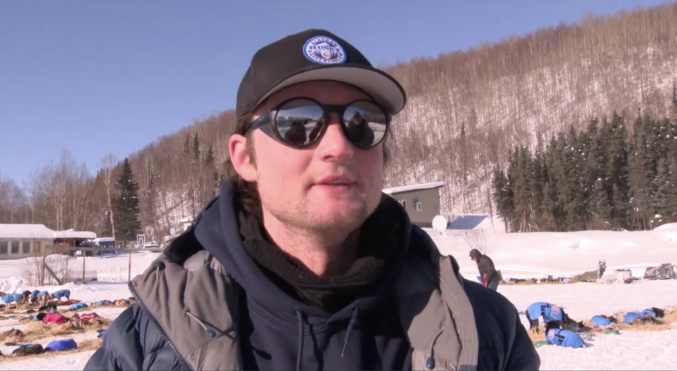
Rookies Kevin Hansen and Sam Martin have departed Cripple for Ruby. These are the two rookies who are leading the class of 2026 on the trail. Sam departed an hour before Kevin. It looks like the race for Rookie of the Year will be between these two guys.
Kevin, born and raised in Kotzebue, checked into Cripple at 02:28 with 12 dogs in harness. The 73 mile run from Ophir took him 15 hours and 15 minutes at an average speed of 4.79 mph. GPS analytics shows that he rested about 5 hours in route. Sam, born and raised in Massachusetts, checked into Cripple at 07:07 with 13 dogs in harness. His run time to Cripple from Ophir was 15 hours and 34 minutes with an average speed of 4.69 mph. GPS shows a run/rest pattern very similar to Kevin’s.
Kevin was born into a mushing family so he’s grown up with dogs and mushing. In 2017, the same year his father Paul finished the Iditarod, Kevin gave up sprint racing for distance mushing. Kevin is a physical therapist and works at the Maniilaq Health Center in Kotzebue. Kevin told Insider that he didn’t have a strategy on paper. He is taking it one run, one rest at a time then responding to what the team needs. Teams from Kotzebue don’t have much practice with technical sledding so the Steps and the Gorge were new experiences Kevin and for his dogs. They responded will.
Sam came to mushing through a summer job working on the Denver Glacier with Alaska Icefield Expeditions. From that summer job, he realized his desire to work and train with sled dogs. He accepted a job at 17th Dog Kennel Operated by Matthew, Liz and Theo Failor. Sam said in an interview, “You can’t ask for better co-workers or office space. The dogs and being outside is what makes it the best lifestyle there is.” Hoping to not jinx his race, Sam told Insider he was having about as much fun as anyone could have, the experience has been pretty awesome. During his 24 rest, Sam focused on getting calories into the dogs as all mushers do. They feed both themselves and the dogs three if not four times during the long break. The question for Sam is how many pieces of pie and what kind did he enjoy at Takotna.