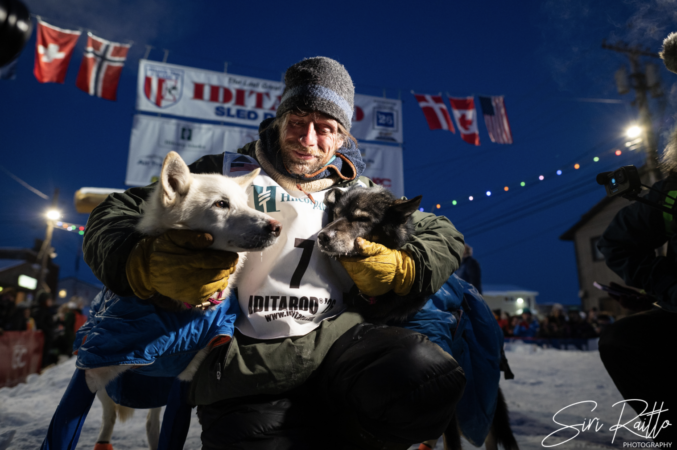
Jessie Holmes successfully defended his 2025 championship. Nine rookies have joined the Official Iditarod Finisher’s Club, bringing the number of finishers since 1973 to 856.
Thirty-seven mushers took to the trail in 2026. Thirty-four were in the competitive class and three were in the Expedition Class. Five mushers scratched leaving the 29th team to claim the Red Lantern. The Expedition class included Kjell Inge Rokke a Norwegian businessman and philanthropist currently living in Switzerland, 2020 Iditarod Champion Norwegian Thomas Waerner who traveled with Rokke and Canadian investor Steve Curtis.
New for Iditarod 54 was the Expedition Class. Expedition teams traveled the trail following dog care and safety standards as well as conduct and sportsmanship expectations. They could swap dogs, rest on a flexible schedule and receive outside assistance. Their dogs went through all the required veterinary exams. Expedition mushers don’t receive prize money or special awards. To earn the Expedition Class finisher’s belt buckle, the musher must complete the entire race on the sled. Of the Expedition Class, only Kjell Inge Rokke finished his run in Nome.
Jessie Holmes is the 6th musher to claim consecutive victories but more important to Jessie is that he defended his first championship. Wanting to prove that he belonged in the Champion’s club, Jessie had told himself that the first win didn’t count unless he could back it up. To follow the first win with a second in the next year is something that only Susan Butcher and Lance Mackey have accomplished until Holmes joined the ultra-elite group in 2026. Holmes also backed up his 2025 wins in the Copper Basin 300 and Kobuk 440 with wins in 2026.
Holmes was the first musher to reach every checkpoint where an award was given for being first – McGrath, Cripple, Ruby, Kaltag, Unalakleet and White Mountain. Also, Jessie was chosen to receive the Herbie Nayokpuk Award. Herbie was known for his smile, enthusiasm, competitiveness, sportsmanship, indomitable spirit, dog care and willingness to share his knowledge. To be like Herbie is a real compliment. In addition to the $80,700 winner’s check, Holmes received $5,549 in cash, $4,500 in gold, numerous beautiful handcrafted items, a jacket, a gourmet dinner and 25 pounds of salmon for the special awards he received.
The purse of $650,000, was greatly enhanced thanks to the financial support from Expedition musher Kjell Inge Rokke. Holmes’ share was $80,700, the largest winner’s portion in the history of the race. All of the remaining mushers in the top 20 received a five digit check. The nine mushers who finished below 20th place each received $2,000, a nice increase from the usual $1,049. The previous largest winner’s check of $75,000 went to Dallas Seavey in 2016.
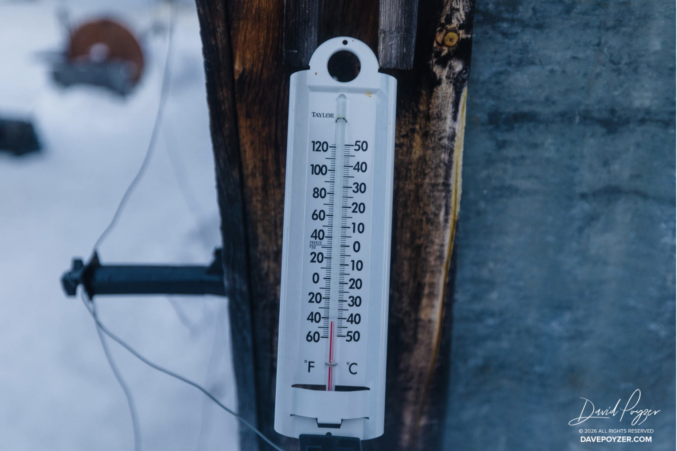
Iditarod 54 was COLD! It wasn’t just a cold snap of a few days, it lasted from the beginning of the race to the Red Lantern musher arriving in Nome. Frosty dogs and frosted mushers were the norm in photos. Night after night, Mother Nature turned the thermostat down to 30, 40 and even 50 below zero.
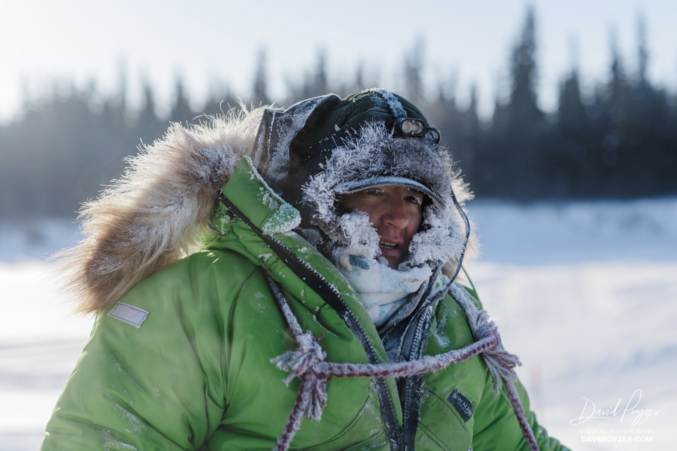
When it’s frigid at night, daytime temperatures stay well below the freezing point. The cold actually helped the dogs in that they didn’t have to deal with warm days. Instead they enjoyed daytime temperatures at zero or not much above that were ideal for distance dogs.
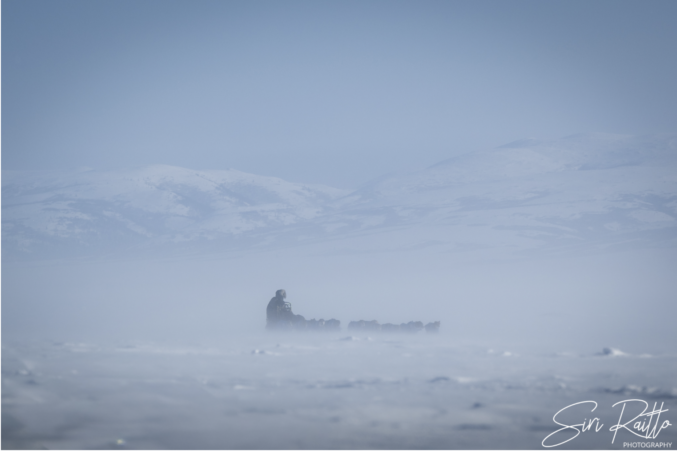
Iditarod 54 was WINDY! Early in the race winds on Puntilla Lake and up into Rainy Pass caused teams to change plans. It was windy coming off the river into Unalakleet and going through the Blueberry Hills outside of Shaktoolik. The run across Norton Sound from Shaktoolik to Koyuk was calm, much to everyone’s surprise and delight.
The front of the pack mushers experienced winds in the Blow Hole that were difficult but manageable. The middle of the pack reported winds that were brutal and more than made up for the easy trip on Norton Sound. It got worse for the back of the pack.
As Kevin Hansen, in 21st position, was completing his 8 hour required White Mountain rest, he noted strong winds with increasing velocity. Hansen and 8 other mushers decided to hunker down for an extended stay in White Mountain. Sitting out the storm increased their chances of reaching Nome exponentially. They become known as the White Mountain Nine (WMIX).
Hansen was in White Mountain for 42 hours and 25 minutes. On the short end, Sam Paperman’s stay was 27 hours and 34 minutes. Sadie Lindquist, Jason Mackey, Joey Sabin, Keaton Loebrich, Sydnie Bahl, Richie Beattie and Brenda Mackey fell between the two for time spent in White Mountain. When the storm abated, there was still wind in the Blow Hole but with strong well rested teams the WMIX cruised to Nome and the burled arch.
Several mushers reported seeing bison in the Farewell Burn, some in the distance, some rather close to the trail and one on the trail. When there’s a great deal of snow, it’s hard for bison to get around. They choose to travel on the path of least resistance, the same hardpacked trail the teams are using.
A few miles out of Rohn, Jody Potts-Joseph met a bison on a narrow tree lined section of trail. The bison, stressed by the difficult winter, had no intention of giving the trail to the dog team. It lowered its head and began pawing at the ground then charged toward the dog team but stopped short.
Jody had a pistol and decided to fire warning shots. All she got was a “click.” As the bison charged again she reloaded and fired again but still just “Click, Click.” Again, the bison stopped short of the team. Jody then moved up to her leaders and took cover behind the trunk of a tree and began hitting the bison with sticks and branches. Still the bison held the trail.
Jody recalled what her Grandmother did when an aggressive grizzly bear came near their cabin with her five little children playing outside. Grandmother told the kids to go inside then she walked up to the bear. In her native language she said, “Go away! Have mercy on us. Leave us alone.” The bear turned and walked away. Speaking in her native language, Jody said the same thing to the agitated bison. The animal turned and walked away. Elders believe animals understand their Han Gwich”in language. From Jody’s story, it seems they do.
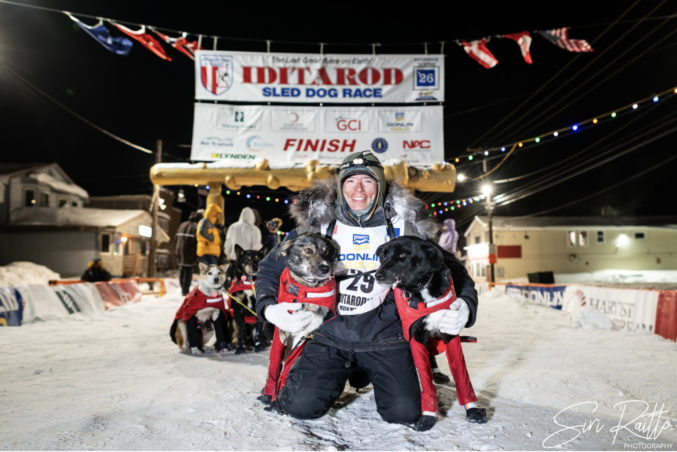
Rookie Jesse Terry’s main goal for the race was to finish with a healthy happy dog team. Rookie of the year was a possibility but not a top priority. Terry, finishing in 14th place, was the highest placing rookie. Letting go of the Rookie of the Year idea, he took extra rest and was always watching and learning while in the checkpoints. The extra rest paid off with a faster dog team and afforded him a wealth of knowledge for future races plus Rookie of the Year Honors.
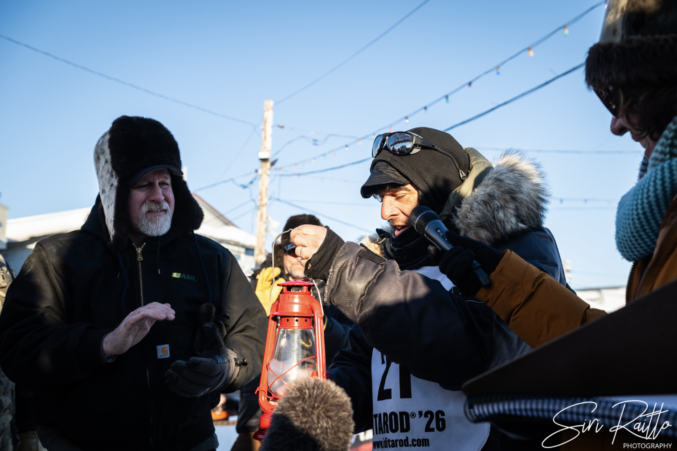
Richie Beattie earned the Lynden “Committed to the Last Mile” Red Lantern Award. The Red Lantern recognizes perseverance and unwavering commitment to complete the race despite unexpected challenges. Beattie, a second year rookie, left Nulato with eight dogs in harness. With Nome 393 miles away, Richie wisely realized that his original race plan would need to be modified to include extra rest. Upon extinguishing the Widow’s Lamp and the Red Lantern at the burled arch Beattie said, “I never worked so hard to get to a finish line.”
Brenda Mackey and Sydnie Bahl joined Beattie as re-rookies. All three were successful at reaching the finish line and earning the coveted finisher’s belt buckle.
Special awards that recognize the values, character and spirit of the race were presented at the finisher’s banquet. Most Improved Musher went to Hanna Lyrek who improved from 19th place in 2022 to 11th place in 2026. Fastest time Safety to Nome, awarded to a musher in the top one-third, went to Jeff Deeter with a run of 2 hours and 58 minutes. The Sportsmanship Award went to Ryan Redington for his ever present graciousness, inclination to share knowledge and willingness to help fellow competitors whenever possible. Paige Drobny was selected by her peers as the Most Inspirational Musher for her determination, integrity and positive attitude on the trail. The Humanitarian Award, given to a musher finishing in the top one-third, went to Riley Dyche for his excellence in dog care throughout the race.
Every musher comes into the race with a well thought out strategy. With wind and cold, Mother Nature affected the plans of even the most experienced mushers. But when it’s Iditarod, everyone expects the unexpected. Success in Iditarod 54 was about taking advantage of the good trail and managing the elements and surprises along the way. Congratulations to Jessie Holmes on consecutive first and second victories. Next up, Iditarod LV!