
As winter is fast approaching, I know we are all waiting anxiously for cold, snow, and sled dogs! The Iditarod is just around the corner… less than 100 days to be exact! Our anticipation for the approaching race, is directly fueled by the time of year, date, and weather. When you get right down to it, that’s cause and effect! The Iditarod is the perfect platform for this essential reading skill. The dogs running for a couple of hours causes the musher to stop and give them a snack. Cause and effect. The musher declared their 24-hour layover, so they must stay and rest that long. Cause and effect. Now, let’s get this sled moving and check out how the Iditarod can help students learn all about cause and effect!
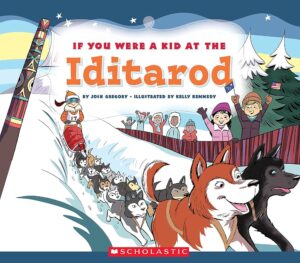
Our December lesson is titled “Paws and Effect”…What Happens Next? This plan will give students a background on cause and effect if they don’t already have it, or it will work to reinforce the skills they currently have. To truly comprehend, a vital skill, is to be able to identify events in the story and how they connect to one another. Mastery of this concept, as well as many others, will help create the reader you are working so hard to create in your students. In this lesson, we begin by defining the words and allowing students to grasp the concept with simple, everyday experiences. We then boost excitement with the read aloud book, “If You Were a Kid at the Iditarod.” If you do not have the book, you can follow the link in my plan to watch the read aloud online. As the story progresses, pull out specific cause and effect connections with your students. Several are listed in the plan to get you started. See if they can identify one or the other, or even both. Not only will they learn some amazing facts and gain Iditarod knowledge, but they will be mastering cause and effect as well. When done, help students see that specific words or phrases such as because, then, if, since, and as a result, help them identify these event relationships. To culminate the activity, make copies of the Iditarod Cause and Effect cards for students to match causes and effects. Feel free to do it with partners, as a whole group, or check out additional ideas in the Enrichment portion. There are several other activity ideas to utilize the cards based on your specific class ability level. Attached in the PDF are 2 pages of cards, in order, for each of 3 learner levels: 1-2, 3-4, and 5-6. The possibilities are endless if you want to come up with your own ideas on how to use them as well! Do you want to “DIG” Deeper? The final link at the bottom is a collection of cause and effect passages for each of 5 levels including lower elementary, upper elementary, advanced elementary/lower middle school, middle school, and high school. Each also comes with comprehension questions as well as worksheet questions with answer keys. I hope this makes your use of the Iditarod and teaching cause and effect that much more user-friendly!
“Trail Techy” this month highlights the vocabulary word, conditionals. In computer science, conditionals are if/then statements. What are if/then statements? Basically, they are cause and effect. IF one thing happens, THEN another thing happens because of it. An example would be, IF you correctly code the computer to roll the ball 5 spaces, THEN the ball will roll 5 spaces. Another simple example is your phone being programmed to accept your password. IF you type the correct numbers or letters in the phone, THEN the phone will unlock. IF you don’t put in the correct numbers or letters, THEN it will not unlock. Our goal this month is to help students see the connection between conditionals or if/then statements and cause and effect. Don’t be intimidated… just jump in with all 4 feet, like any good sled dog, and see what coding your kiddos can do!
- Let’s try some human-powered code! Have students line up and practice performing actions based on conditions. “If you are wearing red, write your favorite musher’s name on the board.” If you have a dog, then crawl on your hands and knees.”
- Watch the video and then use the free Kodable app to let your students practice this skill coding their Fuzz. (you can assign the skill in app settings) Conditionals- Kodable
- Use the platform Scratch or Scratch Jr. for students to build their own simple game like “Catching Apples” or “Pong”. Have them use conditional statements to control the game’s logic, such as, “if the sprite touches the paddle, bounce.”