
T R A D I T I O N !! Along with my handler, I’ve been reading a book called The First Great Race by iconic musher Dan Seavey. Let’s call him Grandpa Dan. Grandpa Dan writes about the very first Iditarod and shares some of the Iditarod traditions that started way back in 1973. Traditions are events that humans and dogs look forward to with great excitement.
Before we jump into all the traditions, maybe we should decide what a tradition is compared to a routine. Think for a minute before reading on. What is the difference?
For the dogs in my kennel, one of our favorite traditions is a night time run on Thanksgiving. It happens to be hunting season in Wisconsin so we don’t go for a run during the day when the hunters are out but after sunset our musher comes out of the big house and we harness up for a run. That’s a special event that happens every year on Thanksgiving – a TRADITION.
On the other hand we get weighed and have our nails trimmed every Monday. It happens like clockwork and there’s nothing special or exciting about the scale or the manicure – it’s ROUTINE.
What about your classroom? What is a tradition you look forward to – maybe the Halloween party or maybe an after school Trunk or Treat? How about something that’s routine – maybe the Friday spelling test? Make a list of traditions you enjoy at school, with friends and at home.
Traditionally, the Iditarod always begins on the first Saturday of March. You’ll be interested to know that in only the first two races – 1973 and 1974 – did the mushers actually run from Anchorage to Nome.
In Nome there’s a tradition that began in 1973 of announcing the arrival of each musher with the fire siren and then the team is escorted down Front Street to the burled arch by a police car with flashing lights.
Trail Mail is another tradition that dates back to the first race. For a small fee, Grandpa Dan carried self-addressed stamped letters from his supporters to Nome to help raise money to cover the cost of his race. He mailed them when he got to Nome. In 1974 the Trail Mail idea was adopted by the Iditarod as a fund-raiser. Trail Mail still travels to Nome with the mushers.
Grandpa Dan says the tradition of noting the fastest time from the final checkpoint before reaching Nome to Nome started with the first race. Bud Smyth claimed the fastest time in 1973. Bud and his sons, Ramey and Cim, have won the award a whole bunch of times. Check the archives to see who else has won that award.
As it was in 1973, the pre-race banquet of today is a much anticipated gathering. There’s a meal that’s followed by mushers drawing for their start position.
In 1973, there were multiple finisher’s banquets held in Nome to honor all of the finishers. Now, if mushers arrive in Nome after the Sunday night banquet, another banquet is held to honor the late arrivals. It’s a tradition to honor the accomplishment of ALL the finishers.
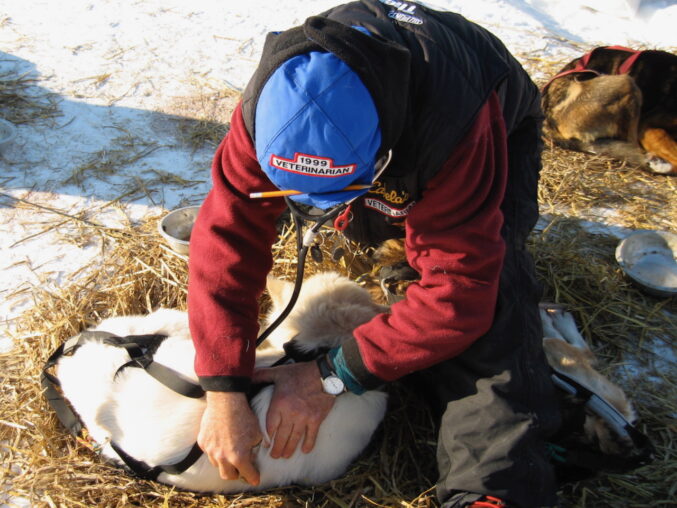
Trail Vets have always been a part of the race. This tradition has really expanded since DVM Terry Adkins tended to the Iditarod teams as the sole veterinarian in 1973. Today there are 40 plus vets and other techs that tend to the canine athletes.
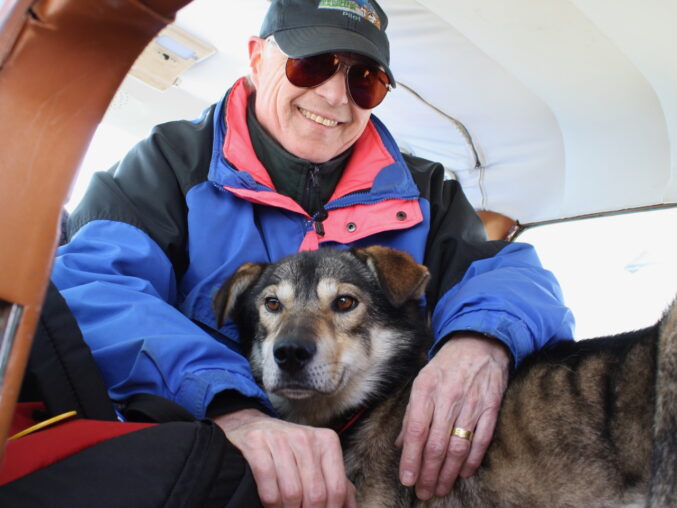
The Iditarod Air Force took off in 1973. A handful of pilots donated their airplanes and fuel as well as their time and skills to transport gear, dog food, dogs, radio people and of course, the vet. Today the Iditarod Air Force carries out the same duties but has grown to around 30 pilots and planes.
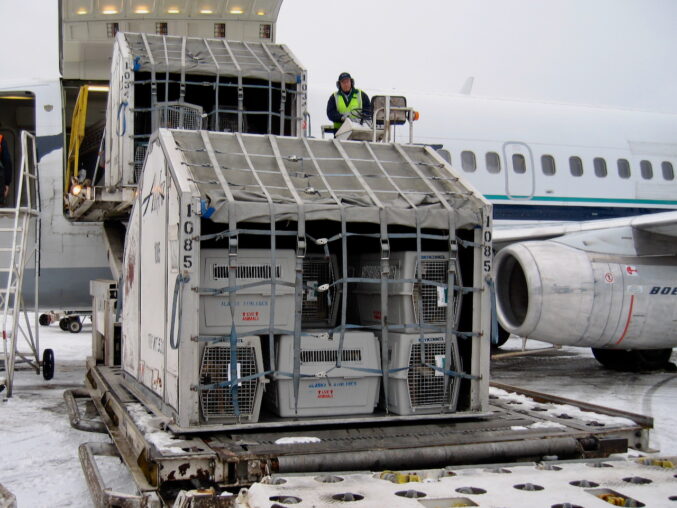
After the race, dogs return from Nome to Anchorage via Alaska Airlines. Housed in sky kennels they occupy the first class section of the plane. The same was true after the first race!
Volunteers! Ever since the very first race there have been volunteers that fuel the race with energy and excitement. They have oodles of jobs that make the race function and they do those jobs very well and with a smile. Volunteers don’t just do the work; they make it work! We dogs like to hear, “Good Dog.” So I’ll say to the volunteers, “Good People.”
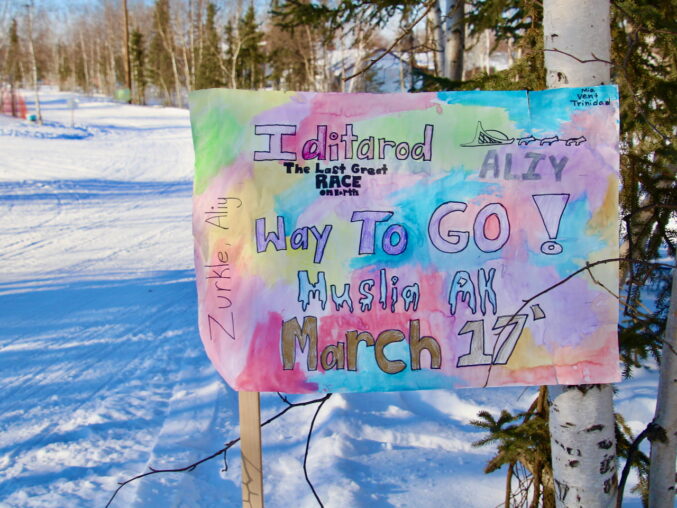
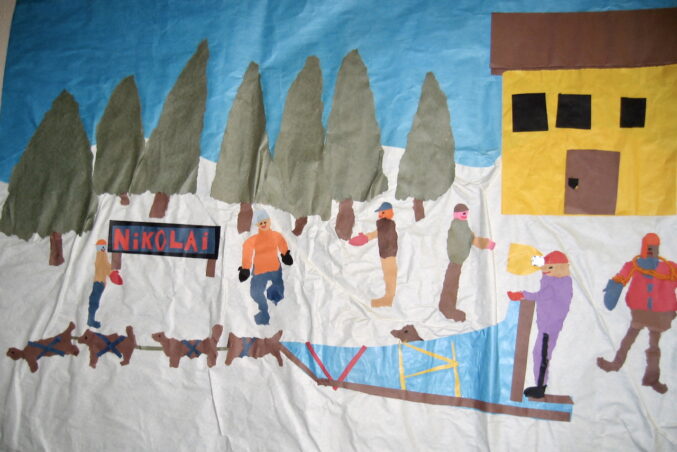
My favorite long standing tradition is students welcoming the mushers and helping in the checkpoints. Grandpa Dan describes how the teachers, students and residents of Nulato set out to make their checkpoint the biggest, best and friendliest during the first race. Kids made signs for the checkpoint and the trail and they cut spruce boughs for bedding. The cleanup crew was mostly students and there were student firemen to provide hot water for every team. When the race goes through a checkpoint today, school is dismissed and the students welcome the mushers, help with all the duties and collect a few autographs while they’re at it.
Well there you have it, traditions that have been around since the first race. Thank you, Grandpa Dan for writing and publishing The First Great Race. Handler and me, Sanka W. Dog, really liked reading about how the Iditarod came about and what it was like to be in the very first race. Grandpa Dan, author of The First Great Race passed away in May of 2025. You can read more about him in this Eye on the Trail Tribute.